A Brief Interlude
Back in My Day…
It always bothers me when someone accuses the culture of sliding. The classic expression, “kids these days don’t know what it’s like” is followed up with the joke “back in my day…” Who thinks like that? No, that is not a rhetorical question. Really, who thinks like that? Seriously voicing these thoughts, means abdicating responsibility for today. It shows a casual neglect for today’s struggles because of an unwillingness to identify with them. And it shows pride viewing past struggles as greater. The core problem is a lack of generational focus. If older generations are leading the younger toward something, there is no us and them, it is we. We are living today and facing our challenges together. ‘All of this is well and good’ you say, ‘but what can we do about it?’
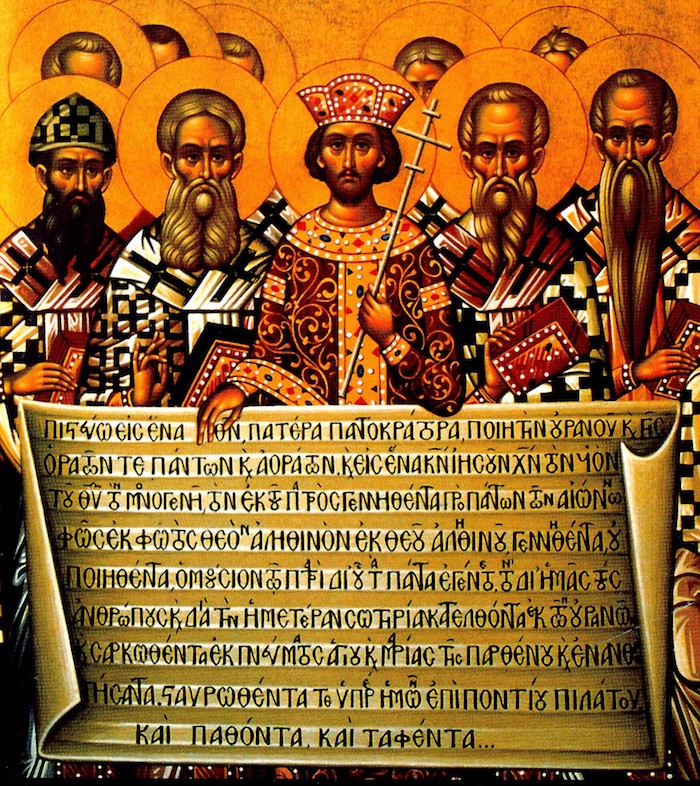
For centuries, Christians used a tool which needs to be reaffirmed, creeds. Creeds are still present in many places; military, medicine, scouts and Christians all have creeds. A creed is generational heritage focusing future minds. The Apostles Creed receives its name from a legend, where the Apostles themselves formed it following Pentecost. The Nicene Creed dates to 325 and addresses deep debates within the church at that time. Learning a Creed unites our generation with the struggles our forefathers faced while giving future generations a cause.
The Nicene Creed begins, “We believe in one God, the father, the almighty, the maker of heaven and earth, of all that is, seen and unseen.” This one line unifies families and communities to move in a common direction. The pronoun, we, is unique from the Apostles Creed’s I, which changes the focus from ourselves to that of the group. American individualism is under attack by the use of this word. Our children must know that it is not about them, but they are a part of a faith with considerable higher importance. It continues, “One God, the Father, the Almighty” tripling down on who God is. This separates Christians from Atheist, Hindus, Buddhist, Nihilist, Agnostics, and Feminist. The ending of the phrase affirms God is maker of all. He is not in us, nor is there a ‘spark of divinity’ in everything. God is the maker and is no more in humans than a painter is in his painting. These are controversial ideas today. But they were controversial when they were first spoken. Indeed, that is why they had to be and should be.
One last thing. A creed is not an argument. There is no debating done in a creed and it is not going to win converts with blunt statements. A creed is the result of wrestling with issues and ideas. It is the trophy for days spent critically asking questions. To this effect, having children memorize the words alone leaves them unable to bear the burden of apologetics. It is like giving a participation award for playing soccer. They did not earn anything and will lose the game when challenged by a better team. Our children must learn why we use these words in addition to what they are.
The current generation is different from the previous one. But this could be said for every generation that has ever been. The sun that rises tomorrow does not bring forth the same light that shone on the Earth yesterday. But it traveled on a similar path and does the like work that the previous day’s light did. It is our job to engage and put the minds of our children to work on correct issues. Creeds are the best tool for families to grow together toward one common purpose in Christ.
At least that’s how we did it back in my day…
 Dad Devotional
“It is the trophy for days spent critically asking questions.” Solid.
This is something I was thinking about yesterday, too, and have felt for a while. Church culture has felt like “conservative” culture in that it often does not lead towards anything. Even “progressive” congregations typically follow in mainstream cultures’ footsteps only once it’s safe to do so.
Nothing is absolutely static unless it isn’t alive. If faith isn’t growing in compassion and power, it’s dead.
To me, what creeds represent are firm foundations, but disappointing ceilings. It’s meant to be the start, not the finishing.
Great post, man.
LikeLike
There is so much depth to faith. Creeds are just the bedrock for the faith and separate Christians from other faiths. Like if someone professes to be a Christian but deny Jesus was really God, that’s a deal breaker. To my point the faith is always growing because there are new people growing in the faith.
LikeLike