What do we know about God? Atheists deny His existence. Agnostics argue His existence is unknowable. Some Christians claim to know Him with certainty. All of these absolutist positions are wrong. The beauty of the Old Testament world is that everyone’s argument is closer to the truth than our world today. The ancients sought to describe the world around them through gods, each with their own opinions on how man is to live and behave. Every culture’s deity affected all areas of life and therefore consulted in decision making. Man sought counsel and god(s) responded. In short, it was a relationship. The argument was never whether your god exists or not, it was our god is bigger, stronger, and better than your god. Therefore, “truer” than yours.
In 2 Chronicles 13, the God of Abraham chooses sides between the divided Israelites. This story is fascinating because it directly addresses their view of God. Which means it addresses a facet of Christ we should understand.
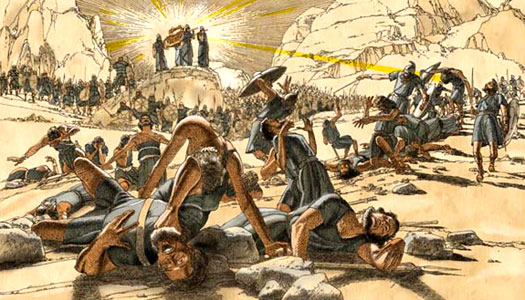
In this story, there are two kings squaring off in battle. The new northern king, Jeroboam (the bad guy in the story) versus a young king in the south, Abijah. The good guys gather 400,000 ‘hand-picked’ warriors, while the bad guys muster twice that number. Abijah and his large army are surrounded on all sides by a massive army double its own strength. It’s looking pretty rough for the home team. So, what do the good guys do? Through Abijah’s mouth, the writer lays out his argument explaining his righteousness, ending in a scathing accusation, “God is with us; He is our leader. His priests with their trumpets will sound the battle cry against you. People of Israel, do not fight against the Lord, the God of your ancestors, for you will not succeed” (2 Chron 13:12). Instead of detailing all the gore of this battle, we are treated with one of the great understatements of the Bible, “Abijah and his people inflicted a severe defeat upon them; five hundred thousand picked men of Israel fell slain.”
If we are not careful, we can completely miss the point of the writer. The ancient world lived by a “might makes right” axiom. The writer turns this axiom on its head, telling everyone it is all wrong. He says in-fact right makes might! The truest God in the ancient world is making His claim that it is not the strength of His army justifying Him, rather His righteousness justifies the army.
How much do we know about God? It’s safe to say bluntly, not much. Why does God use the death of 500,000 people? Why does He take credit for the actions of man? There is a lot here we cannot answer, but we can see God addressing the cultural view of gods. He is showing the world His righteousness is stronger than massive armies assembled. A thousand years later a different king was asked about his power. Answering the question in the same way God answered Judah, Christ says, “My kingdom does not belong to this world. If my kingdom belonged to this world, my servants would fight to keep me from being handed over to the Jewish leaders. But for now, my kingdom is not from here.” (John 18:36). Christ’s sinless righteousness justifies Himself; He does not need armies to justify Him.
God’s message in consistent, whether 500,000 men die or one man. God in the Old Testament and Christ in the New are arguing the same point. It is not about the armies, it’s about righteousness and following Him. Right makes might, this is a gamechanger in ancient times, Christ’s time, and even our time.

 Dad Devotional