Dad Devotional Day 25

Ask Him, He is of Age

John 9

Recently my son celebrated his eleventh birthday.  He is maturing into a strong young man and I wanted to share a message from the scripture with him.  My mind blanked as I began to thumb through the pages searching for anything that stood out.  I stumbled across a story of a young blind man, who Jesus heals with spit and dirt.  As the story unfolded, it had enough pieces that I felt there was something to relate to our only child.  There is the young man, his parents, Jesus, and some antagonists.  Beyond that, I really did not have any idea what I was going to talk about.  But that is nothing new and the Holy Spirit has a way of giving dads something of value to relate.  This one proved to be a gem. 

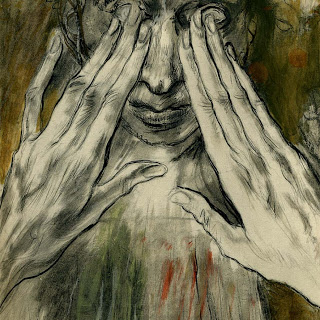
One day the disciples are walking with Jesus when they see a blind man and raise the question of sin.  The disciples want to know if the man or his parents sin caused his blindness.  Jesus responds with “Neither he nor his parents sinned; it is so that the works of God might be made visible to him” (v 3). Spitting on the dirt, Jesus then wipes the mud on the man’s eyes and tells him to wash it off.  The young man regains his sight and shortly thereafter, finds himself dragged before the leading Jewish council for questioning.  Refusing to believe his story, they bring in his parents as well.  Cowering in front of the leaders, the parents respond with “Ask him, he is of age”.  The young man is on his own. 

The Jewish leaders claim the man is lying and accuse him of colluding with Jesus.  His final response is a strong testimony to his moral character.  The man answers, “This is what is so amazing, that you do not know where He [Jesus] is from, yet He opened my eyes. We know that God does not listen to sinners, but if one is devout and does his will, he listens to him. It is unheard of that anyone ever opened the eyes of a person born blind.  If this man were not from God, he would not be able to do anything.” (vs 30-33).  It’s striking that his logic is so bold when compared to his parents. They shrunk in front of the leadership, while his commitment to truth is courageous. 

After reading this story to my son, I had to confess the words the Holy Spirit put in my mouth.  His mother and I are not going to be the unshakable icons of his youth.  We will make mistakes and he is going to have to make a stand on his own.  God will use my son’s life to work his mission and he must decide on whom to place credit. When this happens, it is going to be uncomfortable. Like Christ rubbing mud on the eyes of the young man in the story, my son will be blind to what God is doing in his life until after the trial and Christ reveals his sight.

What we want for our children reveals much about our relationship with Christ.  Do we want our children to be safe, wealthy, happy, successful?  If we call Jesus our Father, then we must look at ask what He wants for us and seek to emulate that for our children.  We will be different from the rest of the world and it will set His kingdom apart. 

Jesus finds the man after he leaves the leader’s interrogation and brings the lesson to its full conclusion.  Jesus ask him, “Do you believe in the Son of Man?” He answered and said, “Who is he, sir, that I may believe in him?” Jesus said to him, “You have seen him and the one speaking with you is he.” He said, “I do believe, Lord,” and he worshiped him. Then Jesus said, “I came into this world for judgment, so that those who do not see might see, and those who do see might become blind.” (vs. 35-39). This is my desire for my son.  I want him to ask genuinely ‘who is the Son of Man?’ And when confronted with Him, I want him to believe on his own accord.  Not because of his parents, family or community, but because Christ uses him to bring sight to others who are blind.

Dad Devotional Day 24

Lost Sabbaths

2 Chronicles 36:15-21

The final fall of Judah begins with “early and often the Lord, God of their ancestors, sent his messengers to them, for he had compassion on his people and on his dwelling place” (v.15).  God is present in the history of Judah.  He is showing up through his prophets, the temple, and their leaders.  But this grand experiment God is conducting does not seem to be working.  The people are constantly fighting and involving themselves in international politics and religion. Looking back through many other biblical examples a definite pattern is developing. 

In the first stories of creation, Adam and Eve fumble and must begin a new life away from the Garden of Eden.  The diluvium flood is a hard reset on humanity establishing a new human lineage.  After God leads the Israelites from Egypt, they falter in their faith forcing God to let them “wonder” for 40 years, until all the old generation dies off.  The Israelite kingdom follows pagan gods and is destroyed.  God is continually working to grow the relationship, but humanity demonstrates a pattern of going off the rails leaving an angry God with no choice but to kill everyone and start over. 

This demoralizing message certainly has been extracted and preached through out the ages.  We humans just kind of suck and we cannot do anything right.  All we need is Jesus. It’s just too bad He doesn’t show up until 32 C.E.  Or maybe…This is an unrealistic and completely wrong interpretation.

Every now and then a system needs to shut down.  This is nothing new and we actually induce these shut downs in our own world from time to time.  When a computer is jammed up with too many commands, you turn it off and back on.  Farmers leave land untilled for a season to restore the nutrients in the soil.  There are limits to any system’s capability. Shutting everything down for a period of time in biblical terms is called a Sabbath.  This important concept was demonstrated by God at the very beginning of creation.  This shutdown does not mean that everything is going wrong with adverse effects. Rather it means that too much is going on and focus is being lost.

Adam and Eve established the sacredness of marriage. Noah established the family as a core unit God works through.  God moved from a family to a people in Moses. And through the Davidic line, we see these people building a kingdom and temple for God.  Amazingly, despite all the ups and downs, humanity is progressing closer to God.  Following each period of growth, there is a pause preparing for the next advancement.  This is cyclical growth. It is not resetting of the pieces to try a different strategy. 

I had in mind that the end of Second Chronicles would be a great culmination of two books and hundreds of years history.  Knowing the story ends with the Jewish diaspora and complete destruction of their land, I felt there should be a momentous call to unite the people to God.  Instead of this grand crescendo, the writer ends with “All of this was to fulfill the word of the Lord spoken by Jeremiah: Until the land has retrieved its lost sabbaths, during all the time it lies waste it shall have rest while seventy years are fulfilled” (v.21). This is all part of Gods plan.

There are no redo’s in life. You are not a mistake to God to be erased and retried by the next generation. You are a part of God’s plan and when He forces you to rest, He is preparing you for His next big move. 

Dad Devotional Day 23

For whom the bell tolls

2 Chronicles 33

Only our nightmares today fully illuminate the losses endured in the ancient world.  Living in a world where armies appear out of the darkness, ransack your home, murder loved ones, and take you away into slavery is unrelatable to our modern experience.  The Lost Tribe of Manasseh, a group of Jewish people wiped from history by war and darkness suffered this fate.  Ensuring captives remain docile and acquiescent; they are issued new names, and every bit of their culture is stripped away.  It was confusing, tumultuous, and depressing.  Two centuries later, in 550 BCE, the rest of the Jewish people are facing similar circumstances. 

Our author, known to history only as “the Chronicler,” is a man living under such conditions.  His one and only desire is to see his people return home from their bondage and live again in peace.  For years he is writing the history of his people, laboring to tell their inspiring and tragic story.  In the famous words of John Donne, he is laboring to show, “No man is an island entire of itself; every man is a piece of the continent, a part of the main.”  Facing extreme cultural extermination, he needs the corporate response of the masses.  And so, he chronicles the diminutive history of King Manasseh, a man whose name is culturally synonymous with a lost people. 

King Manasseh begins his reign following all of the pagan gods.  His devoutness is so extreme he sacrificed his own children to the gods. He leads the people in following foreign gods, neglecting their long-held culture and the God of Abraham.  What follows is eerily familiar to the Chronicler.  Manasseh is taken in chains and hooks to the distant Assyrian capital city of Babylon. In Babylon, he has a change of heart and “in his distress he sought the favor of the Lord his God and humbled himself greatly before the God of his ancestors” (v.12).  Returning to his kingdom a changed man, Manasseh rebuilds the walls of his cities.  He removes the foreign gods and restores worship to the God of Abraham.  He does all this and, in the end, he is blessed to “rest with his ancestors and was buried in his own palace” (v.20).  His life story is the symbolic story the Chronicler desires for his people. 

These simple stories tell of a lost people.  The first story of the Lost Tribe of Manasseh is a cautionary tale of people vanished to history and time, swallowed up in a pagan culture.  The second story, a deported king, returning home and symbolically acting as the hope and redemption for a people.  But there is a third story.  St. Matthew lists another king in the line of King Manasseh.  This king also set forth a path for his people.  But this king is neither cautionary nor symbolic. He showed his people their true identity in the world.  He told his people they are lost in bondage, but there is hope for them.  He came and actively shows the path home.  Jesus Christ is the fulfillment of the lost tribe, He is the fulfillment of the Jewish salvation, He is our fulfillment as gentiles.  Like a bell ringing in the distance, the story of Manasseh proclaims the good news to the land.   ‘And therefore never send to know for whom the bell tolls; it tolls for thee.’ – John Donne

Post Script In Tudor and Stewart England the tolling of church bells signified all kinds of life events. Donne is referring to the funeral bells resulting from the clash between Protestants and Catholics.  I chose to use his poem in this piece because Donne and the Chronicler both focus on the unity of faith in a Judeo-Christian God.  At the end of the poem, the tolling bell’s greatest significance is as a funeral bell for Christ, paradoxically proclaiming good news.

Dad Devotional Day 22

Plausible Deniability

Chronicles 32

There is an ancient Buddhist parable about four blind men learning of an animal called an elephant. Upon finding one, they rub their hands over it and describe the animal.  One feels the tusk, claiming an elephant is long and smooth.  Another rubs the animal’s sides and declares the animal is like a rough wall.  The third, grabbing the elephant’s tail, argues that an elephant is like a rope.  The last one, feeling the ear, says they are all wrong and rather it is like a large fan.  This parable has been told for over 2500 years and is still is true today. 

A history from the Judean Kingdom brings this parable into full living color.  Sometime in the year 701 BCE, the powerful Neo-Assyrians King Sennacherib, invades and captures the northern kingdom of Israel.  This brings him to Jerusalem’s doorstep, who finds herself without the military power to repel the invaders.  King Hezekiah, the Judean King, commands his people to prepare for a long siege by routing a small river’s flow under the city walls.  He also stops up all of the wells in the region, leaving little water available for the invading army.  Then, they pray, “Be strong and courageous. Do not be afraid or discouraged because of the king of Assyria and the vast army with him, for there is a greater power with us than with him. With him is only the arm of flesh, but with us is the Lord our God to help us and to fight our battles” (vv. 7-8).

The Assyrian forces are undaunted and begin to taunt the Judeans.  Every day, they send men to the city’s walls hurling insults instead of rocks.  Citing all of their previous victories, they yell out, “Were the gods of the nations in those lands able to rescue their lands from my hands?” (v.13).  They constantly compare the God of Israel to gods of other defeated nations.  But Hezekiah and the people’s faith holds fast and they pray even more. 

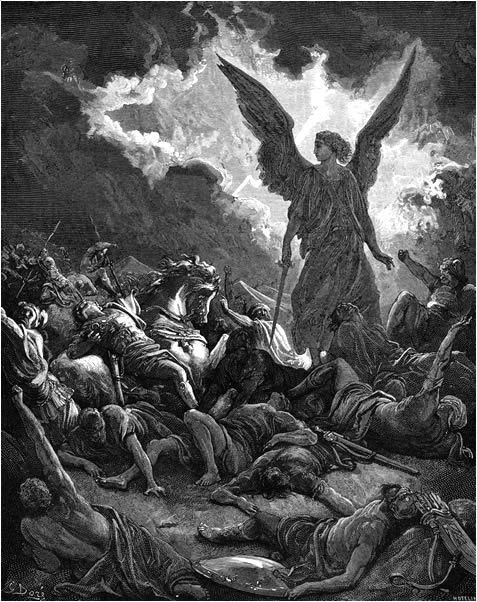
Then something happens.  What it is, is up for debate.  All we really know is that the army withdrew and some years later the Assyrian King was murdered by his own sons.  The Bible says the Lord sent an angel, “who destroyed every warrior, leader, and command in the camp of the Assyrian King” (v.21).  Sennacherib takes a stiff upper lip and records, “As for Hezekiah … like a caged bird I shut up in Jerusalem his royal city. I barricaded him with outposts, and exit from the gate of his city I made taboo for him.” [1] The Greek historian Herodotus, puts a completely different spin on the invasion.  He describes Sennacherib attacking the Egyptians, telling of a priest praying to their god and receiving this answer. “ ‘I shall send you champions,’ said the god. So, he trusted the vision, and together with those Egyptians who would follow him camped at Pelusium… Their enemies came there, too, and during the night were overrun by a horde of field mice that gnawed quivers and bows and the handles of shields, with the result that many were killed fleeing unarmed the next day.”[2] How many different truths are there are in one story!? 

Did God send an angel? Was it a plague of field mice? Did Egypt push Sennacherib back? Or was their turmoil in Assyria?  All of these are red herrings and miss the liberty God offers in this story.  Like the four blind men, we do not know the full picture in life.  We are blessed to have plausible deniability and see the world without God.  This is a freedom he has afforded us.  We can blindly feel our way around and grasp on to one truth.  Our blindness is a testimony to Gods love for us.  We do not live with the overwhelming presence of God forcing us to believe.  We are free to love him wholly, by own choice and that is beautiful. 


[1] Kalimi, Isaac, Sennacherib at the Gates of Jerusalem: Story, History and Historiography (p.38)

[2] Herodotus, The Histories Book II 141

Dad Devotional Day 21

hu·bris •ˈ(h)yo͞obrəs/ • noun – excessive pride or self-confidence

2 Chronicles 26

All sins are bad as they separate us from God.  A favorite Bible verse Christians love to cite, is Romans 3:23 “For all have sinned and fall short of the glory of God.”  Typically, when quoting this verse, they focus on the first half and de-emphasize the latter.  It is as though all sins are equal and damnation is a fait accompli.  Luckily for us, it’s not and in this unique story from Chronicles, we see how God establishes balance to this verse while correcting a man’s heart. 

It begins with a young king’s rise in the kingdom of Judah.  He is only sixteen years old, but is an able administrator and increases the power of his kingdom.  The king’s name is Uzziah and through his prowess on the battlefield “the Ammonites brought tribute to Uzziah, and his fame spread as far as the border of Egypt, because he had become very powerful” (v.9).  He built guard towers throughout the land and recruited the strongest men into his army.  Equipping them with the latest military armor and weapons, he is riding high on a wave of military success.  As the aphorism goes, it is the ‘pride before the fall’.

Desiring one thing more, the king succumbs to his pride and seeks the one thing he cannot have.  He wants to be God’s priest.  Like Adam and Eve in the Garden, he is given all that his eye can see with one command, not to eat from the tree of the knowledge of good and evil.  God alone has that knowledge and imparts it to His priest, of which Uzziah is not.  But, King Uzziah wants it and he is accustomed to getting his desires. 

Going to the temple, King Uzziah throws open the doors.  Seeing this, a large group of priests nearby follow him in.  In shocking effrontery, he grabs one of the golden incense plates and begins burning a sacrifice to the Lord.  One of the priests bravely speaks up saying, “That is for the priests, the descendants of Aaron, who have been consecrated to burn incense. Leave the sanctuary, for you have been unfaithful; and you will not be honored by the Lord God.” (v.18).  In this sacred space, the king violated the purity of the temple with his actions. 

In one of those wonderful old-world examples of justice, God shows up.  King Uzziah is furious at the priest for correcting him and instantly a contagious disease breaks out on his forehead. It is leprosy, one of the most contagious diseases in the ancient world.  The priests hurry the king from the temple and he struggles with the disease for the rest of his life.  The king’s pride was clouding his heart and his relationship with God.  In order for him to grow in the Glory of God, this pride must be removed from him.  

We may be great in one area, but our pride tells us we deserve more.  Pride is the sin from which all sins begin.  But rather than looking at sin negatively, we are be better served by seeking the Glory of God in the positive.  Like the king, we all struggle with pride, but we are all able to move closer to the Glory of God.  Falling short of the glory of God, means that God’s glory is something to strive for.  In a word it is holy

Dad Devotional Day 20

The Slot Machine

Acts 17:16–34

I once went to a casino in Reno Nevada.  Walking by the slot machines, I was amazed at the numbers of people toiling away in vain to win a buck.  Tired and slouched from hours sitting on padded vinyl seats, they were usually accompanied by an ash tray of cigarette butts just as crumpled as their bodies.  Everywhere there were shinny slot machines singing the promises of rewards if the patron only sit before it. 

St. Paul must have felt similarly walking the streets of Athens in 51 CE.  The city was only about 20,000 in population and much smaller than the prominent Corinth, five times its own size.  It was old and run down with its population longing for the greatness of their past.  Walking down the street, Paul sees idol after idol each promising its patron a bit of hope.  The newer and fancier, the better the promises.  Surely a god made of gold is more powerful than a god made of stone! 

Then Paul sees a unique idol . One that is barely noticeable.  This idol is different.  This one looks a bit old and hastily made.  On its pedestal there is a roughly carved inscription stating, “The Unknown God”.  This idol is for the chronic worshipper.  This one is for the person who has tried all of the other idols and none of them have come through.  This idol is for the person who has hit rock bottom. 

Leading Paul to the Areopagus, the local philosophers asks him to teach a lesson.  His lesson is startling and he tells them “the God who made the world and everything in it, being Lord of heaven and earth, does not live in temples made by man, nor is he served by human hands, as though he needed anything, since he himself gives to all mankind life and breath and everything.” (Acts 17:24).  To the men of Athens, this is a complete reversal of the divine role.  They serve the gods and in return the gods watch out for their interest. 

Drawing on their own culture, Paul takes them one step further, calling them sons and daughters of God.  The God they should be seeking is a man and He has come.  He is Jesus of Nazareth, was crucified, dead and resurrected.  This resurrection is the proof of the hope they have been looking for in all of their other idols.  Upon hearing Paul’s argument, many in the crowd jeer and make fun of him.  But not everyone. 

In the casino there was one unassuming slot machine.  Tucked away in the corner and forgotten by all, except the most devout casino patron.  This is the slot machine Paul is talking about.  This slot machine is the one to go to when all others have taken your money.  This slot machine is unlike all the rest, because it actually pays out. But it doesn’t want your money.  In fact, the coin was inserted long before you showed up.  All you need to pull the lever and you will receive the reward.  Christ is the slot machine, the coin, and the payout. 

Dad Devotional Day 19

A Price to be Paid 

2 Chronicles 25

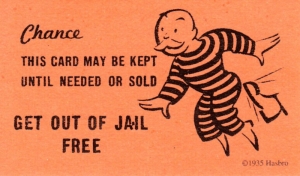
This is the Sunday School lesson of Jesus; He came and took all of the penalties due to us, because we are unable to pay these penalties ourselves.  Jesus is murdered in our place and enables us to go to heaven.  This, we are told is ultimate forgiveness.  What kind of forgiveness is this? Is the cross really a get out of jail free card?  Let’s look at a story from the ancient kingdom of Judah and shine a light on forgiveness.

A young king starts out as a decent leader, following the cultural laws set in place by Moses hundreds of years before.  He assumes the throne due to his father’s recent murder.  After finding the killers, he condemns them to death.  By all other cultural standards of the day, the murder’s family would also be put to death.  But this is not the common practice in Judah.  Moses established a new practice hundreds of years before, protecting the families of the accused and signified a break from surrounding cultures. 

Then one day, king goes to battle against his enemies.  In other cultures, it is accepted practice to hire mercenaries in order to augment your army.  The king has a large army, but in the famous words of Stalin, “quantity has a quality all its own.”  So, he hires more men from another kingdom.  The king veers away from his culture and follows the culture of other pagan kings.  The wonderful thing about a cultural norms are we all know when they are violated.  But it takes a uniquely strong individual to speak up when a leader violates them. 

As the king is preparing for battle, an average guy approaches him.  The scripture never records his name, instead only refers to him as a man of God.  He has the common sense of a grandfather and says, “Your Majesty, these troops from Israel must not march with you, for the Lord is not with Israel—not with any of the people of Ephraim. Even if you go and fight courageously in battle, God will overthrow you before the enemy, for God has the power to help or to overthrow” (2 Chron 25:7).  The king has already paid these mercenaries.  He is going to lose all of the money and make a bunch of greedy soldiers very irate.  He finds himself at odds with his own culture and has a choice to make. 

The king accepts the counsel and disbands the mercenaries. As anticipated, they are furious for losing the prospect of the spoils of war. On their return home, they attack town after town killing and looting as they go.  Three thousand civilians are murdered.  The price paid for inviting these men to the battle is enormous.  But the king wins his battle and kills many of his enemies.  The king is forgiven for breaking the culture God established in the kingdom.  Though he receives his victory, he still pays a price for making a choice against it. 

Christ actions on the cross are more than forgiveness.  They reestablish a and fulfill a culture we are meant to follow. God forgives our sins because of Christ’s sacrifice. But we play a part in this sacrifice.  Christ death and life are the culture we must seek to live in.  When we sin, we are living outside of His culture and we, like the king, pay a price for this choice.  Christ is not a ‘get out of jail free card’.  He is a green card, verifying our permanent residency in His culture.  Christ’s message on the Cross is; we are set apart and different from all other cultures.

Dad Devotional Day 18

2 Chronicles 21:12-20

The Hideous Inside

Our world today misses the color in ancient history.  Massive armies clashing against each other in hand to hand combat, prophets proclaiming unknown diseases sweeping through populations, are just a few of the examples.  In a world unlit by science and technology, the existential questions of an internal disease become purely spiritual.  Why would the god(s) allow a painful disease kill people?  What did they do to deserve this? All of these questions can be answered in the ancient world with one word, obedience.  If sacrifices and oblations are left undone, the gods get angry.  It’s a divine quid pro quo. 

The ancient Israelite and todays Christian uniquely struggle with this question.  We believe God is a God who loves us and wants the best for us.  We also believe that He is responsible for everything, including a disease that shows up out of nowhere.  How can two disparate ideas such as love and pain live in harmony? This huge question is outside our scope to fully develop, instead let’s focus on an example from the kingdom of Judah.

The year is 850 BCE and the fifth King of Israel assumed power by murdering his six brothers.  King Jehoram is fighting off raiders and busily setting up pagan temples.  One of the great heroes of the faith, the prophet Elijah notices sending the king an ominous message.  In it he says, “You have not followed the ways of your father…you have led Judah and the people of Jerusalem to prostitute themselves… murdered your own brothers, members of your own family, men who were better than you… You yourself will be very ill with a lingering disease of the bowels, until the disease causes your bowels to come out.” (2 Chronicle 21:12).  This disease lingers for two painful years before his insides fall out, killing him.  

On the surface, this sure seems like the pagan version of quid pro quo.  The king neglected God, thereby angering God and paying the price.  Which is the case, if we completely discount his soul.  That other half of us, which is sometimes overlooked.  The soul and the body operate as one. If our body is sick, then our soul can suffer too.  If our soul is sick, then our body can suffer.  We see this in the sick person angrily turning away from God and in stress removing years from our bodies.  God cares about the whole of us, our body and our soul. 

Before King Jehoram and the people became physically ill, they were already spiritually ill.  They were living their lives completely unaware of the spiritual disease growing inside of them.  Like a doctor’s x-ray, God uses the literal physical disease to show the people that spiritually their insides are diseased. The people’s souls are killing them. 

Christ describes himself as a physician sent to heal the sick.  He certainly does physically heal them, but He is not calling himself a doctor in the traditional sense.  Christ aims to heal the sickness of the soul.  Christ’s prescription is not a divine quid pro quo, Christ prescription is relationship.  Why bad things, happen is not the important question.  The question is when these things happen, are we considering our relationship with our creator? 

Dad Devotional Day 17

2 Chronicles 20

The Marching Band Takes the Field

We love underdogs—the guys with little chance attacking the game with all their might against impossible odds. It’s the Rudy Ruettiger or 1980 US Olympic Hockey team, encouraging us to strive for our dreams.  In short, we love hope.  What if the underdog is more than a long shot? The underdog has no shot.  Instead of sending out the football team, the coach makes the extreme choice to send out the marching band.  What happens when the marching band goes up against padded angry football players?

King Jehoshaphat of Judah finds himself in this predicament when multiple armies are marching against Israel.  A recent loss leaves his severely weakened forces with no way to defend his kingdom.  His devoutness and faith borders on extreme and would be considered negligence in any government today.  Turning to the only “arsenal” he has left, he begins preparing for spiritual warfare.  Beginning with an entire kingdom fast, then a huge corporate meeting for prayers and worship.  God’s response is a prophecy by one of the priestly families, telling the congregation, “You won’t be fighting in this battle. Take your stand, but stand still, and watch the Lord’s salvation on your behalf, Judah and Jerusalem! Never fear and never be discouraged. Go out to face them tomorrow, since the Lord is with you.’” (2 Chron 20:17).  This sounds ridiculous. Picture the White House’s Situation Room with all of the Security Council deliberating and the chaplain stands up assuring everyone God’s got this one!

The Kingdom of Judah believes this prophet. The following day, instead of sending out a bunch of soldiers, they send out the marching band.  The marching band strikes up a crowd favorite “Give thanks to the Lord, whose love endures forever” and immediately the opposing armies turn on each other! By the time the king’s people arrive to the battle site it’s awash in blood and carnage. Only the wagon trains full of loot are left.  It takes them a full three days to haul the spoils off and everyone is a bit freaked out. 

The takeaways are all over on this story.  We can easily point to the power of spiritual warfare and see how impactful they can be in our lives.  Fasting, prayer, corporate meetings, worship, and prophecy are all tools God uses to bring us closer to Him.  We can look at the Kingdom of Judah’s faithful obedience and apply it to our lives as well.  Every worship leader should use this story, trying to win an argument for more stage time! (Alright, maybe not.) All of these are solid lessons to be learned and applied to our lives.

This story shows us something more about God’s heart and explains why Christ hanging on the cross is called a victory.  God is not just the God of the long-shot; He is the God of the “no-shot.”  He showed the people of Judah that despite armies rising against them, and a victory would be seemingly impossible, He was there.  When the followers of Christ saw His limp body buried, all of their hopes of a Messiah were buried too. But God was still there.  In our life when your wife leaves you, when your child is sick, when you lose your job, God is there.  Our story of Judah is personified in Christ and his victory through death on the cross. 

I don’t know why God makes it so difficult at times.  What I do know, is when all that is left is the marching band, you send them out in full anthem to the field.

Dad Devotional Day 16

2 Chronicles 14-16

And again, I say unto you, it is easier for a camel to go through the eye of a needle, than for a rich man to enter into the kingdom of God. -Jesus

Matthew 19:24

This verse makes devout American Christians tremble and stay awake at night. How can anyone with a family, job, and life expect to be considered citizens of the Kingdom of God?  It doesn’t matter your income bracket; we all live in one of the wealthiest countries in history.  Three quarters of a million dollars in total assets places you in the top 1% of the world. If this amount of wealth still seems like a lot, only one hundred thousand dollars places you in the top 10%.  This verse appears to be the most damning verse of the Bible! Is there any hope for those born into the “lucky sperm club” of America?

A brief story may help.  The year is 900 BCE and a new king has ascended the throne of Judah.  King Asa inherited a kingdom recently ravaged by Egyptians and struggling in the tumultuous region.  Like most young men, he is full of vinegar and tears down all the pagan idols and begins fortifying his cities.  One day, a rider rushes into the court reporting a one-million-man army of Ethiopians are on the march against Judah.  This is over three times the force he can muster and additionally they have companies of charioteers with them.  This poor king’s only hope is to pray the Jewish version of ‘Hail-Mary’ and hope God shows up.  And He does. This victory sparks 30 years of peace and progress in the kingdom. 

Fast forward to the end of the King Asa’s life—he has done everything that a good king should do.  He has led his people wisely, increased wealth for the kingdom, and grown in diplomatic power.  So, when the rival northern kingdom of Israel marches against him, he leverages everything he has solving the problem.  He makes the ‘smart’ move, buying an alliance with a strong neighboring kingdom.  Through this alliance Israel is defeated.  God responds by sending a prophet chastising the king for relying on a pagan king rather than Him.  King Asa promptly throws the guy in prison and then dies of a foot disease, all the while refusing to turn to God. 

This man’s life is a living example of Jesus’ parable about the difficulties of wealth.  Wealth causes us to seek our own resources to save us.  It causes us to cease asking God for help and thereby we exclude ourselves from the kingdom of God.  Comparatively speaking, King Asa was always the richest man in the Kingdom, although at one point his heart was firmly fixed to God’s.  What really changed was Asa’s heart.  God never criticized wealth and neither does Christ.  Christ is not a communist or ascetic.  Christ is God in human flesh and He demands to be right in the middle of your life.  God’s message to King Asa was “The eyes of the Lord roam over the whole earth, to encourage those who are devoted to Him wholeheartedly.” (2 Chronicles 16:9). 

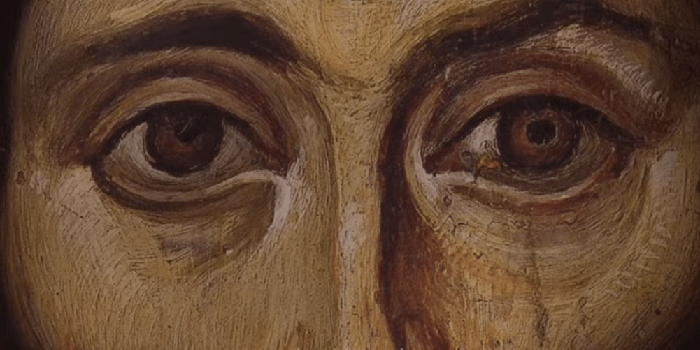
We all decide which eye to fix our gaze upon, a needle’s or God’s.