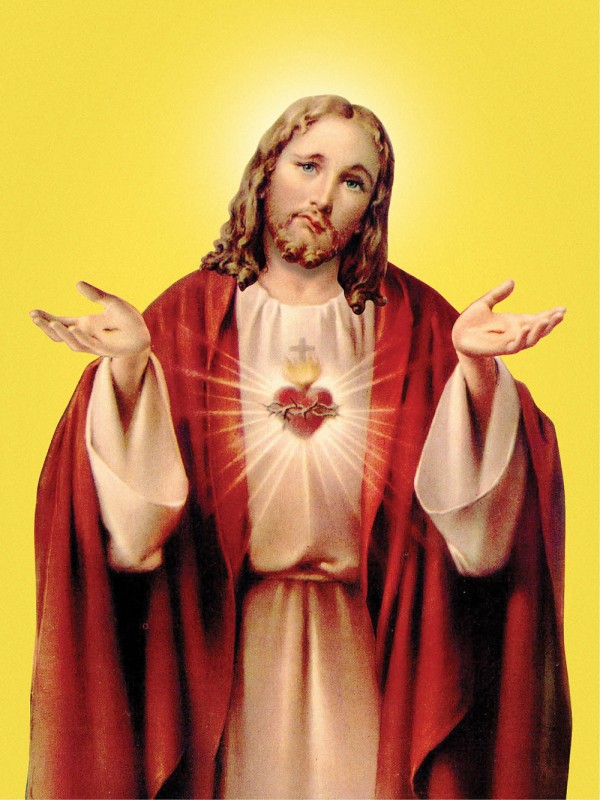
A small break from our current reading of Psalms and Proverbs to talk about Protestantism and Catholicism.
For the past year, Christ has been working in my heart leading me and my family to a fuller understanding of Scripture. This process started with shaking my faith really hard. It then led to looking for churches that were actually meeting in person, which in turn led to attending a Catholic Mass. After few promptings by the Holy Spirit, I found myself in RCIA (Rite of Christian Initiation of Adults) and on my way to Confirmation this Easter. It has been a journey and my son has been along for the ride. We are learning new prayers and he is attending a new Catholic School. It was a bit of a shock to my family, because I grew up as a Protestant attending a very good non-denominational Christian school. I decided to write this article to highlight misunderstandings between Catholics and Protestants and more importantly, to collect my reflections for my son. This is my novice Catholic rationale for some differences and why I am continuing to follow the road Christ led me to a year ago.
God the Father gave all of His Son and His Son gave all of Himself
Two thousand years ago when Christ walked the Earth, it was a very different place. This would not strike anyone as novel and my son would be prodding me here to move along with the lesson. To the Jews of the day, the world was already very old. Abraham was alive two thousand years before Christ and Noah was about a thousand years before that. The God of the Old Covenant was distant and removed from his people. But He wanted His creation to know Him intimately and be His sons and daughters.
This required a New Covenant in the full giving of Christ Jesus. Christ then gave all of Himself for us to establish this New Covenant with God. It was not only His virgin birth, not only His ministry, not only His death on the cross, everything He is, is bequeathed in this New Covenant. This theology is essential to understanding the Catholic faith. There is not one part of Christ withheld from His followers. Paul stresses this point in Rom. 8:17, Gal. 3:29, Gal. 4:7 and many more places. From this full giving theology flow all of the teachings of the new Covenant.
This idea of fullness or cohesiveness is pivotal when comparing Protestantism and Catholicism. Both theologies must be in line and conditioned on one unconditional truth, i.e. God. To make this happen Protestantism omits key elements of Scripture to keep it logical, but theologically lacking. When these elements are incorporated, the theology and practice of the faith looks a lot like the Catholic Church. It is this fullness of understanding Catholic Church that led me to read Scripture in a new light.
Literally or Literarily
Admittedly English is a dumb language. Our words can have double meanings and even when we use very precise phrases, they can still be misinterpreted. So, when Christians say the Bible is true, it is still an ambiguous statement. The universal Christian theology is founded on the sacredness of Scripture. Anything more starts splitting Protestants and Catholics. Many fundamentalist Protestants claim a literal interpretation, albeit with astricts all over the place. C.S. Lewis, a lion of Protestant apologetics, clearly rejects literal fundamentalism in Reflection on the Psalms ch. XI. Here he states, “that every sentence of the Old Testament has historical scientific truth.” On the contrary, says Lewis, “[This] I do not hold, any more than St. Jerome did when he said that Moses described Creation ‘after the manner of a popular poet’ (as we should say, mythically) or than Calvin did when he doubted whether the story of Job were history or fiction.” Adherence to a literal interpretation is uncorroborated in Scripture itself and is not supported by major theologians. Therefore, any church teaching this would be inserting their own unscriptural theology. What follows is that many of their teachings from the Scriptures would be potentially flawed. In order to form a sound argument Scripture is treated as a salad bar, picking and choosing verses.
Catholicism has a long tradition teaching the Scriptures literarily. This means just as we approach Shakespeare, Locke, or Plutarch; we should also approach the Scripture. Asking critical questions and applying proper context is expected. This is the teaching of the Catholic Church (CCC 109 & 119). Within this critical analysis must be a continuity of the whole body. This makes complete sense and if you are like me, leads one to ask what happens when there is an interpretational disagreement? This obvious question shows the problem with Sola Scriptura or Scripture Alone theology. The Scripture itself recognized tradition as predating it (see 2 Thes. 2:15) and gave Peter authority over reconciling these disputes (see Matt. 16:19). Christ knew there would be disputes between interpretations and taught His followers how to resolve them for example: ex cathedra, synods, and traditional teaching. This logical and scriptural support for an arbiter leads to the question: is it the Catholic Church?
Mustard Seed and the oneness of his Church
We tend to romanticize Christ walking around with an intimate group of Apostles and a larger group of disciples. This leads many Protestants striving to recreate it today and model their churches after it. I don’t begrudge them and on one level, this sense of intimacy with every Christians, is part of Heaven. But this leads to many small disunited bands of believers rather than one church. The Protestant view of The Church is a general collection of people who call themselves Christians and move in an anamorphous cultural blob. One small church springs up here and another one dies out there. The goal seems to be similar the crab grass in my back yard, constantly spreading.
Pondering this, the parable of the mustard seed came up (see Matt. 13:31). Christ describes the Kingdom of Heaven (i.e. His Church) as the smallest of seeds, but grows up into the largest of trees. Why after two thousand years, would Christians be looking for a young little sapling? It should be a mighty, well established tree able to support the many demands of the world. Also, Eph. 4:3-6 stresses there should be one Church and one body. If I am to call myself a faithful follower of Christ and the Scripture, how could I not take this verse very personally in a Protestant denomination? Webster defines denomination as a recognized autonomous branch of the Christian church. If Scripture teaches there should be one church, which one is it?
The obvious answer to me is that it is the one in existence following Christ’s crucifixion. It is the one with all the scars of time and humanness of Christ’s suffering. It is the one which the Apostles themselves recognized (see Phil. 4:3). In 1 Clement (an early church letter), there is a brief anecdote that helps to show how the early church saw itself operating. Peter appoints Clement as a Bishop in Rome and when Peter is martyred, Clement becomes the head of the Church in Rome. A little while later, there is a dispute within the Church, and even though John the Apostle was still alive, they turn to Clement to adjudicate it. The Church recognized Jesus’ words to Peter (see Matt. 16:16-19) as bestowing a unique authority, which he passed on to Clement. The more I delved into the Gospels, the more Peter kept popping up. Peter is the fisherman of men, Peter is there at the transfiguration, Peter denies Christ, and Christ commands Peter to tend His sheep. Peter, Peter, Peter!
There is one more argument which is strong enough to include here. Every time Christ refers to His Church, He calls it a Kingdom. His tell Pilate, that He is indeed a king (see Jn. 18:37) and all over the scriptures He is called King. If He is king, then wouldn’t it logically follow that His church would look like a kingdom? Now I am a simple man and I am familiar with four forms of governments: republic, democracy, oligarchy, and autocracy. Christ says that His Church is like the last one. This means that if a church operates in any of the other way, it is by definition not operating as Christ commands it to operate. Now, the Pope is not its king, Christ is King. Rather he is Vicar of Christ acting as His representative. A bad pope or a good pope is inconsequential to the argument. All I need to know is Christ says kingdom, He says Peter, and the church fathers affirmed apostolic succession.
Rejection of Church fathers but reverence for founding fathers
I suppose this is as good a place as any to put my next objection. Why do American Protestants revere the founding fathers of our country, but reject the founding fathers of the church? Much of Protestant theology is built upon the arguments of Polycarp, Irenaeus, Aquinas, Augustine, Ignatius, and more. Do you believe in the trinity as one God, three persons? What about Christ being 100% man and 100% God? What about presbyters and deacons in your church? All of these good issues were established by church founding fathers. But, most Protestant churches in America would not recognize any of these men as authoritative?
Let’s choose one as a good illustration. Polycarp was the Bishop of Smyrna and lived 65-155 AD. Polycarp came to follow Christ and was instructed by John the Apostle and many others who had seen Christ. He went on to refute heresies and his citations of scripture attributed to the canonization of the New Testament. This guy is a huge founding father of the faith. He is like James Monroe establishing the Monroe doctrine guiding our foreign policy for the first 100 years. Protestant claiming the Scriptural authority of the Bible should at least submit to the teachings of the man who helped codify it. But Polycarp taught Irenaeus, who taught the perpetual virginity of Mary, and True Body of the Eucharist, and a bunch of other things Protestants don’t like so he could not possibly be right about those things.
The hubris is almost unbearable. Accusing a man who is effectively the spiritual grandson of Jesus Christ to be correct in his selection of scripture, while incorrect of his application of it and therefor relegated to the dunce corner is absurd. Jesus did not give us the answer to all our questions, rather He gave the Holy Spirit leading men to speak authoritatively. Being nearer to His teachings in time, certainly places the authority of the early church fathers over the teachings of any Protestant Reformer.
This is my body & The Eucharist
In the Protestant Church, the Lords Supper can take many forms except one. It can range from a general meal in a home to a formal ritual in a building. The purpose is usually remembering Christ’s death for our sins. It is thought of as a symbolic act setting Christians apart from non-believers. It often is one of the only two traditions (baptism being the other,) a Protestant church actually performs. But under no circumstances, no matter how fundamental, or literal the church claims to be will it ever be what Jesus Christ Himself says it is…
The Catholic Church refers to certain elements of the faith as ‘mysteries.’ By this, they mean there are parts of the theology, we could never figure out on our own. For instance, no matter how hard theologians try they can never come to the conclusion that Jesus Christ is the Son of God and He died for our salvation without God actually revealing this to us. In other words, you can’t logic your way to the cross. During the Last Supper, Christ instituted a ritual with specific instructions “do this in remembrance of me” (see Lk. 22:19, 1 Cor. 11:23). This is a command by Christ and He describes what is happening. He tells the Apostles, “this is my body” and “this is my blood” (Matt. 14:22). The Catholic Church is wise enough to recognize that when the Son of God says, “this is my body” and “this is my blood” He means it. We should believe Him and take it very seriously. They recognize that it doesn’t taste or look like it, but somehow in God’s mysteries it truly is His body.
I can’t logic my way to the Eucharist and that does bother me. But I can’t logically figure out the cross either. What does make logical sense is to listen to Christ’s words and believe them. Christians should show the same appropriate reverence to the Eucharist as they would show to Christ body. Through faith in Christ word’s, I can recognize the Eucharist as more than a tradition or symbol. It is Christ’s changing the essence of the bread and wine into Himself. The saints of the early church clearly held this belief, which is one of the reasons they became Saints.
Saints and Mary
The amount of misinformation perpetuated among Protestantism in regard to Saints and Mary is voluminous. Praying to saints, creating statues of them, and naming churches are all maligned as sacrilegious. I was right there with them. Like Saul persecuting what he did not understand. But the Scripture has a basis for Saints. There is so much of an argument for them, that I began to wonder on what basis is the argument against them? Lest I be too cavalier in my criticism, I must acknowledge that humans have a tendency to abuse most everything. Assuredly, this is one of those cases where abuses in the past lead to continuing issues today.
Have you ever asked a fellow Christian to pray for you? If so, you never thought that were worshipping them, did you? Nor should you. We recognize that God wants our prayer all the time, every time. Asking a fellow Christian to pray for you is inviting them into your suffering to lay it before God.
From this logical step, let’s look at three scriptural truths. Christians are and will remain alive because of God’s grace. Matt. 22:32 states, “I am the God of Abraham, the God of Isaac, and the God of Jacob. He is not the God of the dead, but of the living.” In a real sense, the physically dead in Heaven are actually spiritually more alive than we are. If then, we ask someone who is still struggling with spiritual death to pray for us, why would we not ask someone who is fully alive and with Christ to pray for us? The next truth comes from Paul who tells us, “Therefore, since we are surrounded by such a great cloud of witnesses, let us throw off everything that hinders and the sin that so easily entangles.” (see Heb. 12:1). Paul tells us we are not alone in our struggles, angles and saints are here rooting for us. The angels and Saints are part of our church family and including them in our prayers is recognizing all of Christ’s Church. Lastly, in Rev. 5:8, “the four living creatures and the twenty-four elders fell down before the Lamb. Each one had a harp and they were holding golden bowls full of incense, which are the prayers of God’s people.” I know what you’re thinking, ‘don’t get all eschatological on me now.’ But hang with me, these twenty-four elders are Christians in Heaven presenting the prayers of saints (i.e. Christians here on Earth) to Christ. This is part of the vocation of Saints in Heaven. To me these are strong arguments to ask a Saint in Heaven to pray for you.
Mary is special because she is the mother of God and Christ gave her to His church (see Jn. 19:25). But more than that, by the time the Book of Revelations was written around 96 AD, Mary was widely recognized as the Mother of the Church. For this reason, she appears in Revelations 12 with twelve stars on her crown. The early church recognized this as the twelve tribes of the church adorning her head or rather the twelve tribes resting on hers. There is much more to Marian doctrine, but the Catholic Church is correct to hold her in the highest esteem among all the Saints.
Salvation and Purgatory
Once saved always saved and the Luther maxim, “sin boldly” are classic phrases encompassing the core theology of Protestantism. There is nothing that can separate us from the love of God and from this kernel Luther made the leap saying, “No sin can separate us from Him, even if we were to kill or commit adultery thousands of times each day.” Christ blood does cover all sins, but if you really lived out Luther’s argument, it would be hard to make the case that you are actually in Christ. The person Luther is describing is a chronic murdering sexaholic. There are many scripture verses refuting this, Rom. 6:1, 1 Jn. 3:6, Rom. 3:8, Gal. 2:17, Jer. 4:14, and Rev. 22:11 just to name a few. Protestants tend accuse Catholics of claiming the saving grace of the cross is not enough. But this is far from the truth.
The Catholic Church agrees the saving grace of the cross is sufficient to cover all sins, but there is more to it. The Bible speaks of salvation in three different tenses; past, present, and future. Because this is how Scripture approaches salvation it is how the Catholic Church does.
Past. Christ’s victory on the cross is final and accomplished. He will never die on the cross again nor are Catholics re-crucifying Him every Sunday. Catholics affirm 1 Pet. 3:18, “For Christ also suffered once for sins, the righteous for the unrighteous, to bring you to God. He was put to death in the body but made alive in the Spirit.” Acknowledging this victory and submitting to His authority is the first step to salvation.
Present. Christians colloquially use the phrase, “you will know them by their fruit”. This means that if someone is sinning, they are not in Christ. James very clearly argues the value of a righteous life in Jas. 2:14 “What good is it, my brothers, if someone says he has faith but does not have works? Can that faith save him?” Paul also supports this idea again and again in his writing, depicting our salvation as a race to be run to the end.
Future. Though Christ died for us, we continually struggle with sin day in and day out. The Bible teaches us that there is an expectation of our perfection (see Rom. 13:11). Some day in our future, we will have a judgement and we will be completely saved. When that day comes our salvation will be complete.
Then there is a small little thing that Protestants have a hard time understanding, Purgatory. Honestly, this objection I don’t totally understand why there is a big problem with this theology. We are sinful and have sin in us. We have a natural tendency to sin and this needs to be fixed before we enter Heaven. Scripture even teaches, “no unclean thing shall enter heaven” (Rev. 21:27). Purgatory is the scrubbing clean of all our sins by Christ’s cleansing fire (see 1 Cor. 3:12-15). Does it hurt, I don’t know, probably. I’ve been sinning my whole life, so it makes sense that it’s unpleasant. If I have more of a tendency to sin, it also makes sense this process might take a bit longer. The point is we all are sitting around in our filth and need a bath before we can go to the party. It is not punishment for our sins, rather it is Christ’s love actually washing them off of us.
True Church or Full Church
Protestants can be very territorial and start claiming all kinds of ‘true this’ and ‘true that’. They build churches right next to each other and start all kind of arguments. It is good to have debate, but it is not good to divide a church because one pastor teaches infant baptism and another adult. One church wants to celebrate the Eucharist reverently and another wants to have a rock band. This article has been focused on theology and that’s where I am going to keep it. There are many churches teaching theological truths and certainly have strong Christ followers. But there is only one church striving to include all of the Scripture and tradition to the fullest.
This is the stance of the Catholic Church. In the most recent Vatican Council II, the Catholic Church went way out its way in to stress it does not claim to be the true church. The Catholic Church affirms Scripture referencing many coming from afar to sit at the table of Christ (see Matt. 8:11). Also, Jesus’ teaches the Apostles about others preaching his word (see Lk. 9:50). What the Catholic Church does claim is to be is the fullest embodiment of Christ’s Church. And it does not claim to be perfect. It is the first to recognize its flaws and again cites scripture, pointing out that even Judas was counted as one of the Apostles. Despite all its flaws, it is scriptural, Apostolic, Universal, One, and Holy. All through my search, the Catholic Church’s theology is water tight just like the ship she claims to be.
The beginning
I once had a coworker who would say, “If I’m wrong, I want to know”. I loved his humility and truth seeking. Without a doubt my thoughts here are incomplete and debatable. But the argument for Catholicism is stronger than Protestantism. Protestantism removes elements to dilute the fullness of the Scripture and weaken the theology. Catholicism fully wrestles with Scripture and does its best to be Christ’s Church here on Earth. One more point in closing. I approached this whole process through a search of theology, because anything else could be misleading. We should not choose a faith based on music, art, eloquence, or any other personal preference. If the evidence leads me toward an uncomfortable and unfamiliar place, I must follow it. If there are parts I personally may not like, the truth is, I must be wrong.
 Dad Devotional